Music and Emotion
Why music moves us - the interplay of reward pathways, autonomic response, prediction, memory, and cultural learning.
Why music is emotionally special
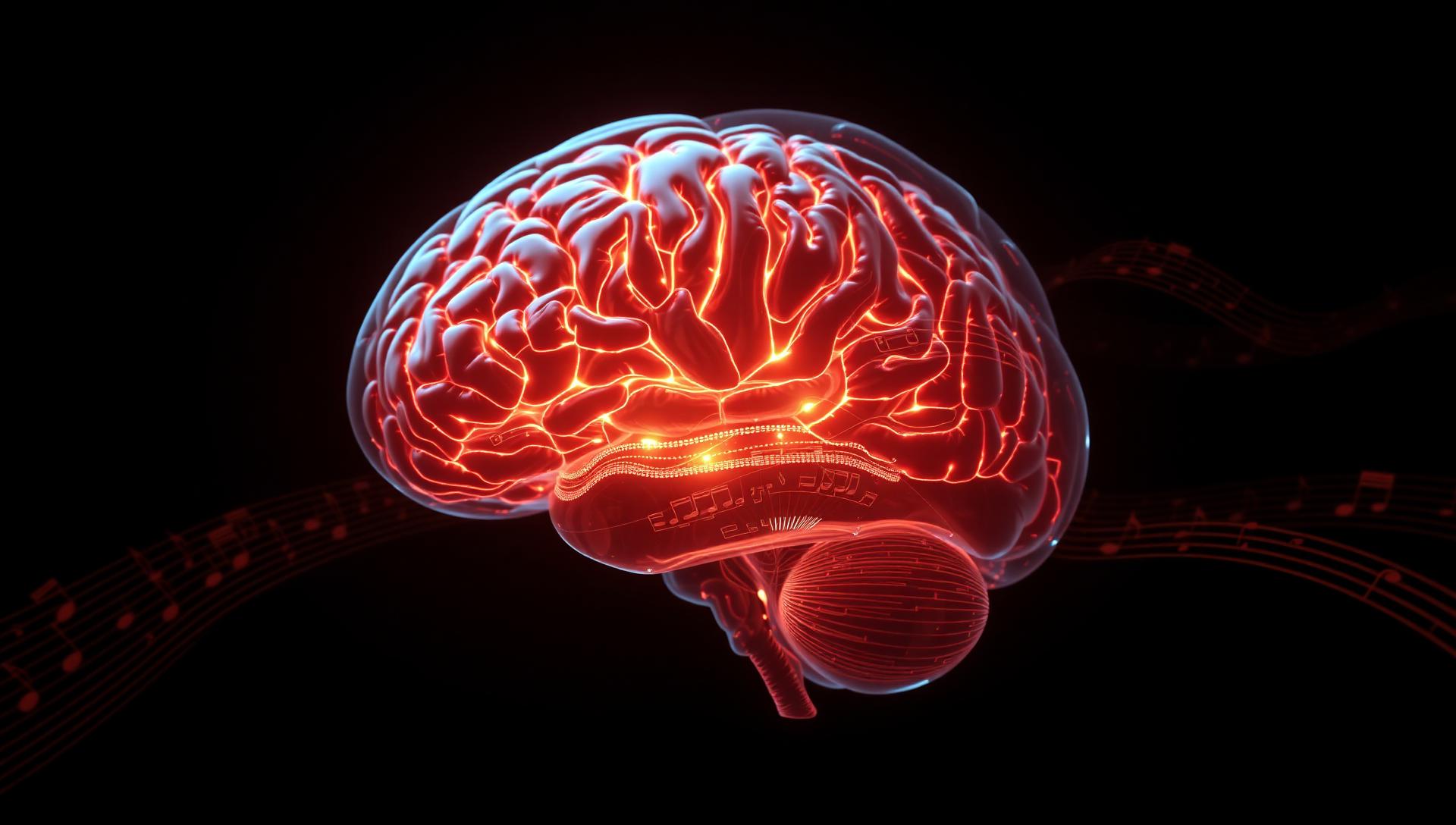
Music is one of the few reliable, non-drug ways to induce emotion in a controlled laboratory setting. Functional imaging shows it recruits limbic and paralimbic regions - amygdala, insula, ventral striatum, cingulate cortex, and orbitofrontal cortex - alongside the auditory system (Koelsch, 2014). Music also produces measurable autonomic changes: heart rate, skin conductance, and respiration all move with musical arousal.
The influential BRECVEMA framework (Juslin, 2013) proposes eight mechanisms through which music evokes emotion: brainstem reflex, rhythmic entrainment, evaluative conditioning, contagion, visual imagery, episodic memory, musical expectation, and aesthetic judgment. Most emotional responses to a piece of music involve several of these at once.
Music, stress, and the body
Reviews across dozens of studies suggest that listening to self-selected relaxing music can modestly reduce self-reported stress, heart rate, and cortisol in some contexts (Chanda & Levitin, 2013; de Witte et al., 2020, meta-analysis). Effects depend heavily on preference, familiarity, and setting. The American Psychological Association notes that music is a widely used self-regulation tool but is not a replacement for treatment.
Sad music, pleasure, and meaning
Sad music is a paradox: many listeners actively seek out music that expresses sorrow. Proposed mechanisms include a sense of being understood, empathy without personal cost, prolactin release associated with comforting, and aesthetic pleasure distinct from real-world sadness (Sachs, Damasio, & Habibi, 2015). Individual differences in empathy and personality shape who most enjoys and benefits from it.
Culture, universality, and context
The Natural History of Song project (Mehr et al., Science, 2019) analyzed music from cultures worldwide and found reliable acoustic signatures for song functions such as lullabies and dance songs, alongside meaningful cultural variation. Emotional meaning in music is neither purely innate nor purely learned - it is a layered system built from perception, prediction, and enculturation.
Frequently asked questions
- Can music genuinely change mood?
- Yes, at least in the short term. Music listening reliably shifts self-reported mood and arousal, and can reduce measures of stress and anxiety in a range of clinical and everyday settings (Chanda & Levitin, 2013).
- Why does sad music feel good?
- Sad music can produce a mix of low-arousal pleasure, empathy, and reflective self-focus. Proposed mechanisms include prolactin release, safe distance from real loss, and the pleasure of aesthetic engagement (Sachs, Damasio, & Habibi, 2015).
- Is the emotional impact of music universal or cultural?
- Both. Some acoustic features (tempo, brightness) map onto arousal across cultures, but many meanings are learned. Cross-cultural work shows shared and culture-specific components (Mehr et al., Science, 2019).
- Can music help with anxiety?
- Cochrane and other systematic reviews find that music interventions can modestly reduce pre-procedural anxiety and improve mood in some clinical populations. Effects vary and should not replace professional care (Bradt et al., Cochrane Database of Systematic Reviews).
References & further reading
- Koelsch, S. (2014). Brain correlates of music-evoked emotions. Nature Reviews Neuroscience, 15(3), 170-180 DOI: 10.1038/nrn3666
- Juslin, P. N. (2013). From everyday emotions to aesthetic emotions: Toward a unified theory of musical emotions. Physics of Life Reviews, 10(3), 235-266 DOI: 10.1016/j.plrev.2013.05.008
- Chanda, M. L., & Levitin, D. J. (2013). The neurochemistry of music. Trends in Cognitive Sciences, 17(4), 179-193 DOI: 10.1016/j.tics.2013.02.007
- Sachs, M. E., Damasio, A., & Habibi, A. (2015). The pleasures of sad music: A systematic review. Frontiers in Human Neuroscience, 9, 404 DOI: 10.3389/fnhum.2015.00404
- de Witte, M., Spruit, A., van Hooren, S., Moonen, X., & Stams, G. J. (2020). Effects of music interventions on stress-related outcomes: A systematic review and two meta-analyses. Health Psychology Review, 14(2), 294-324 DOI: 10.1080/17437199.2019.1627897
- Mehr, S. A., Singh, M., Knox, D., Ketter, D. M., Pickens-Jones, D., et al. (2019). Universality and diversity in human song. Science, 366(6468), eaax0868 DOI: 10.1126/science.aax0868
- Salimpoor, V. N., Benovoy, M., Larcher, K., Dagher, A., & Zatorre, R. J. (2011). Anatomically distinct dopamine release during anticipation and experience of peak emotion to music. Nature Neuroscience, 14(2), 257-262 DOI: 10.1038/nn.2726
Related articles
This article is an educational summary of publicly available research and is not medical advice. It does not diagnose, treat, or cure any medical or psychiatric condition. Where evidence is emerging or mixed, we say so. Consult a qualified professional for personal guidance.