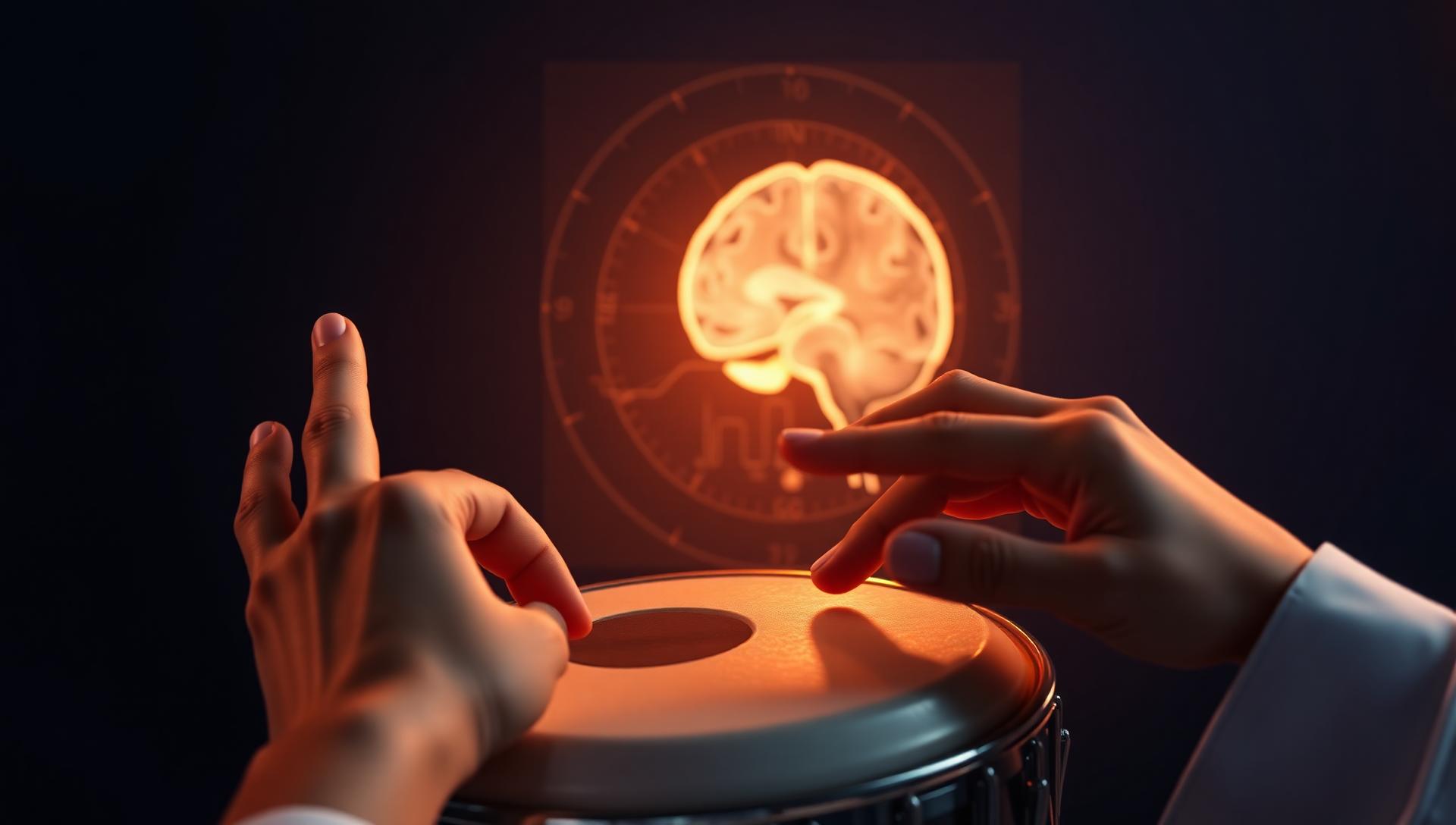
Music Therapy
A recognized clinical profession that uses music-based interventions - within a structured treatment plan - to reach communication, cognitive, motor, and emotional goals.
A regulated profession
In the United States, music therapists complete accredited bachelor's or master's programs, clinical internships, and the board certification exam administered by the Certification Board for Music Therapists (MT-BC credential). Similar credentialing structures exist in Canada, the United Kingdom, Australia, and across Europe.
Music therapy sessions may include active music-making, improvisation, songwriting, receptive listening, lyric discussion, and structured techniques such as Neurologic Music Therapy - always within a documented treatment plan.
- Neurorehabilitation
Rhythmic auditory stimulation for gait in Parkinson's; melodic intonation therapy for post-stroke aphasia.
- Dementia care
Personalized music and group music therapy for mood, engagement, and reduced agitation.
- Mental health
Adjunctive music therapy for depression, anxiety, and trauma-focused work.
- Autism support
Music-based interventions used to support communication, joint attention, and social engagement.
- Palliative care
Symptom, emotional, and spiritual support in hospice and end-of-life settings.
- Pediatrics & NICU
Live music with certified therapists to support feeding, sleep, and physiological regulation in preterm infants.
Where research is strongest
Beyond depression, systematic reviews have documented meaningful effects for music therapy in dementia care (van der Steen et al., 2018), stress and anxiety reduction (de Witte et al., 2020), and in specific neurological rehabilitation applications (Thaut & Hoemberg, 2014). The National Institutes of Health, National Institute on Aging, and NIH's Sound Health initiative in partnership with the John F. Kennedy Center have supported expanded research on music and health.
Where care is needed
Not every "music-based" claim online reflects music therapy. Terms such as "sound healing" or "vibrational therapy" are not regulated professions and vary widely in training and evidence. Consumers should distinguish between a wellness experience and a clinical intervention, and check credentials (MT-BC or an equivalent national registration) when seeking care.
Frequently asked questions
- Is music therapy the same as listening to relaxing music?
- No. Music therapy is a healthcare profession delivered by board-certified music therapists who complete accredited training. Listening to relaxing music at home is a wellness practice, not clinical therapy (American Music Therapy Association).
- What conditions is music therapy used for?
- Common clinical applications include neurological rehabilitation after stroke and traumatic brain injury, Parkinson's disease, autism spectrum disorder, dementia care, mental health support, chronic pain, and palliative and hospice care.
- Is there evidence music therapy works?
- There is meaningful evidence for specific applications - for example, music therapy for depression (Aalbers et al., Cochrane, 2017) and for people with dementia (van der Steen et al., Cochrane, 2018) - though effect sizes and study quality vary.
- What is Neurologic Music Therapy?
- Neurologic Music Therapy (NMT) is a standardized set of techniques developed by Thaut and colleagues that applies music-based interventions to sensorimotor, speech and language, and cognitive rehabilitation.
References & further reading
- American Music Therapy Association (2024). What is Music Therapy?. AMTA Source
- Aalbers, S., Fusar-Poli, L., Freeman, R. E., Spreen, M., Ket, J. C. F., Vink, A. C., ... (2017). Music therapy for depression. Cochrane Database of Systematic Reviews, 11, CD004517 DOI: 10.1002/14651858.CD004517.pub3
- van der Steen, J. T., Smaling, H. J. A., van der Wouden, J. C., et al. (2018). Music-based therapeutic interventions for people with dementia. Cochrane Database of Systematic Reviews, 7, CD003477 DOI: 10.1002/14651858.CD003477.pub4
- de Witte, M., Spruit, A., van Hooren, S., Moonen, X., & Stams, G. J. (2020). Effects of music interventions on stress-related outcomes: A systematic review and two meta-analyses. Health Psychology Review, 14(2), 294-324 DOI: 10.1080/17437199.2019.1627897
- Thaut, M. H., & Hoemberg, V. (Eds.) (2014). Handbook of Neurologic Music Therapy. Oxford University Press
- National Institutes of Health & The John F. Kennedy Center (2023). Sound Health Initiative. NIH Source
- Johns Hopkins Medicine, Center for Music & Medicine (2024). Research programs on music and neurological disease. Johns Hopkins University School of Medicine Source
Related articles
This article is an educational summary of publicly available research and is not medical advice. It does not diagnose, treat, or cure any medical or psychiatric condition. Where evidence is emerging or mixed, we say so. Consult a qualified professional for personal guidance.