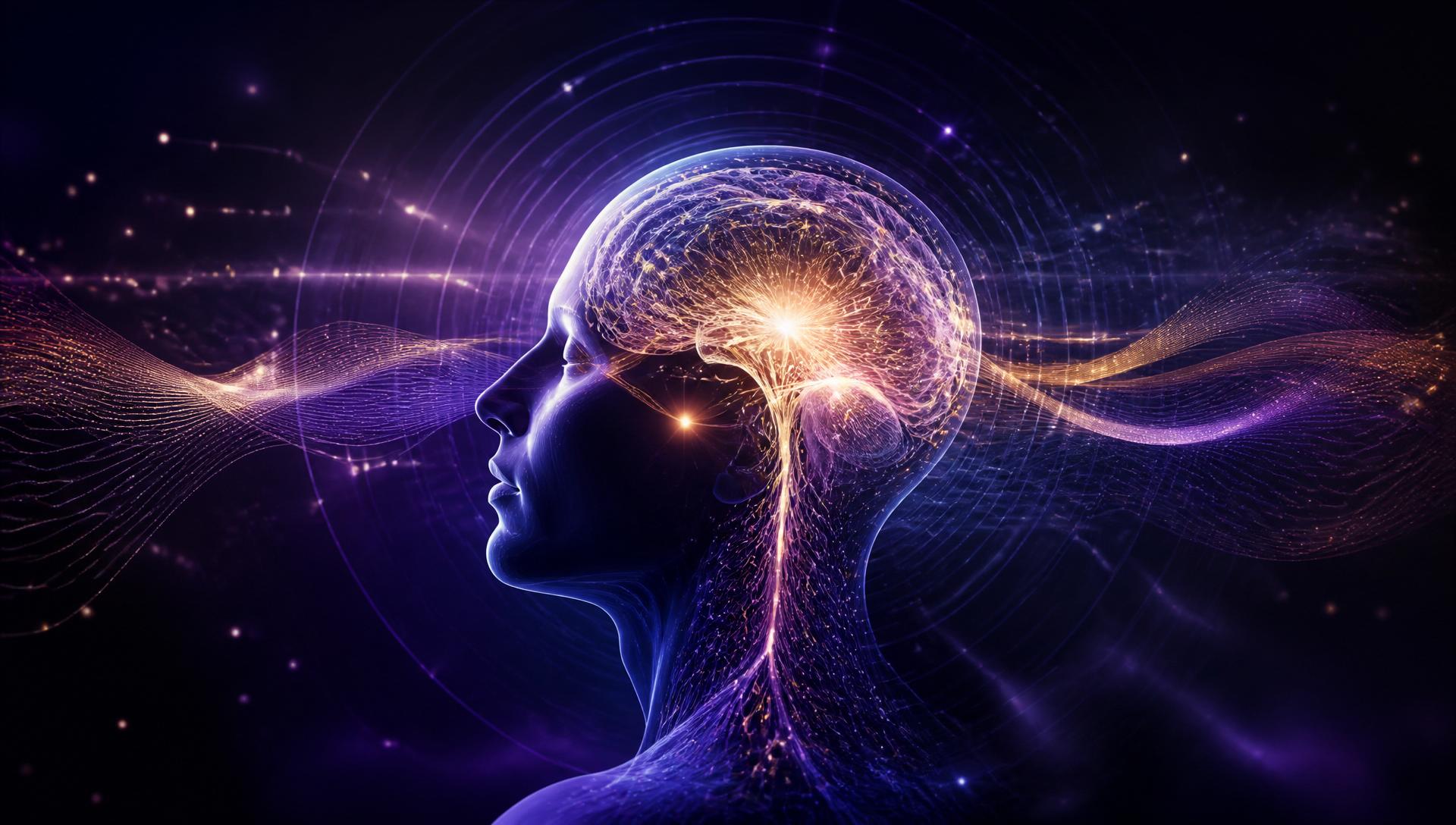
The Science of Sound, Music & Conscious Experience
Modern neuroscience, psychology, music therapy, and immersive audio research continue to explore how sound influences emotion, cognition, stress, attention, relaxation, and subjective experience. This guide summarizes what the evidence suggests - and where important questions remain open.
Why sound affects the brain
Hearing is the fastest of the human senses. Sound travels from the cochlea into the brainstem within milliseconds, then fans out across networks that handle attention, emotion, memory, prediction, and motor timing. That wide reach is why music can feel like it moves through the entire body, not just the ears.
Rhythm engages motor and timing circuits, which is one reason a steady pulse can steady breathing and gait. Melody and harmony interact with the brain's prediction machinery - familiar patterns set up expectations, and the interplay of fulfillment and surprise contributes to what researchers describe as musical pleasure, often accompanied by dopamine release in reward-related pathways.
Emotional processing draws on limbic structures such as the amygdala and insula, while memory-linked regions can make a familiar song feel like a time machine. The concept of neural entrainment - the tendency of brain rhythms to align with external rhythms - is an active area of study; effects are often subtle and context-dependent rather than dramatic.
Music, emotion & mental wellness
A substantial body of research suggests that music can support short-term stress reduction, relaxation, and mood regulation. In everyday life, people use music to shift energy, focus attention, accompany movement, prepare for sleep, and reflect. These effects are meaningful, even when they are modest in magnitude.
Evidence is stronger for some outcomes than others. Reductions in subjective stress and pre-procedural anxiety are consistently reported. Effects on focus depend heavily on the task, the person, and whether the music contains lyrics. Sleep support and creativity effects are promising but more variable across studies.
Music is not a replacement for mental health care. It can be a genuinely helpful daily practice, and, when clinically indicated, a component of professional treatment. The distinction between wellness listening and clinical intervention matters.
Music therapy
Music therapy is a recognized healthcare profession. Board-certified music therapists complete accredited training and clinical internships, and they deliver music-based interventions within a structured assessment and treatment plan.
Current clinical uses include neurological rehabilitation after stroke, gait and speech support in Parkinson's disease, engagement and quality-of-life work in dementia care, communication and regulation goals for people on the autism spectrum, symptom and emotional support in palliative and hospice care, and adjunctive support in mental health settings.
A playlist is not a treatment. Music therapy is delivered by qualified professionals working alongside medical and mental health teams.
Sound, meditation & immersive audio
Ambient music, drones, nature recordings, and gentle rhythmic stimulation are widely used in meditation and mindfulness. They can provide a stable auditory anchor, reduce the pull of distracting thoughts, and pace the breath. Spatial and binaural techniques can add a sense of presence and immersion.
These practices are best understood as supportive tools for relaxation, attention, and sensory experience. They are not medical treatments and should not be presented as cures.
Music in psychedelic-assisted therapy research
A growing body of clinical research is investigating psychedelic-assisted therapies under controlled medical conditions. Within that research, curated music is treated as an important part of the therapeutic "set and setting," alongside trained therapists, screening, and integration sessions.
Investigators suggest that music may influence emotional processing, shape the arc of a session's subjective experience, support imagery, and help participants stay engaged with difficult material. Optimal music selection, mechanisms, and long-term outcomes remain open questions.
To be explicit: music alone is not psychedelic. Music does not replace medical treatment. This research takes place in regulated clinical settings, not through consumer listening.
The future of personalized sound
Emerging research explores adaptive music that responds to the listener, personalized sound environments, biofeedback loops using heart rate or breath, wearable sensors, and AI-assisted composition. The vision is listening that adjusts to state, context, and goal rather than a fixed playlist for everyone.
These are promising directions rather than established clinical practice. Careful evaluation, transparency about limitations, and respect for user privacy will shape whether personalized sound becomes a durable part of everyday wellness.
Explore topics
Short introductions to the areas covered across this guide. Full deep-dives will expand over time.
- Relaxation
How slow tempos, low-frequency textures, and predictable patterns support parasympathetic downregulation.
More soon - Focus
Lyric-free ambient and steady rhythmic textures that reduce distraction during deep work.
More soon - Creativity
Mood, novelty, and moderate arousal as ingredients in divergent thinking.
More soon - Sleep
Wind-down soundscapes, breath pacing, and consistent nightly cues for healthier sleep onset.
More soon - Meditation
Drones, nature sound, and rhythmic breath cues used in contemplative practice.
More soon - Recovery
Gentle listening environments used adjunctively during rest, movement, and reflection.
More soon - Emotional Balance
Music's role in mood regulation, emotional processing, and self-soothing.
More soon - Immersive Listening
Spatial audio, binaural techniques, and multi-layered composition for presence.
More soon - Music Therapy
A recognized clinical profession using music within evidence-based treatment plans.
More soon - Neuroscience
How the auditory system, limbic circuits, and prediction networks respond to sound.
More soon - Personalized Audio
Adaptive, biofeedback-informed, and AI-assisted sound tailored to the listener.
More soon
Frequently asked questions
- Can music actually change how the brain works?
- Music engages auditory, motor, memory, reward, and emotional systems. Research shows measurable short-term effects on mood, arousal, and attention. Long-term structural or clinical effects are more nuanced and depend on the person, context, and intervention.
- Is music therapy the same as listening to relaxing music?
- No. Music therapy is a recognized healthcare profession delivered by board-certified music therapists working within a treatment plan. Listening to relaxing music at home is a wellness practice, not clinical therapy.
- Do binaural beats really change brainwaves?
- Binaural beats are a psychoacoustic illusion produced when each ear hears a slightly different tone. Some studies suggest short-term effects on relaxation or attention, but evidence for reliable brainwave entrainment or clinical outcomes remains mixed.
- Is sound used in psychedelic-assisted therapy research?
- In controlled clinical research, curated music is considered part of the therapeutic 'set and setting.' It is thought to support emotional processing and imagery. Music alone is not psychedelic and does not replace medical treatment.
- What is personalized sound?
- Personalized sound refers to adaptive listening experiences shaped by preference, context, biosignals, or AI-assisted composition. It is an active research area rather than established clinical practice.
Related reading
AudioErotic is a general wellness and creative sound platform. This page is educational and is not medical advice. It does not diagnose, treat, or cure any medical or psychiatric condition. Consult a qualified professional for personal guidance.